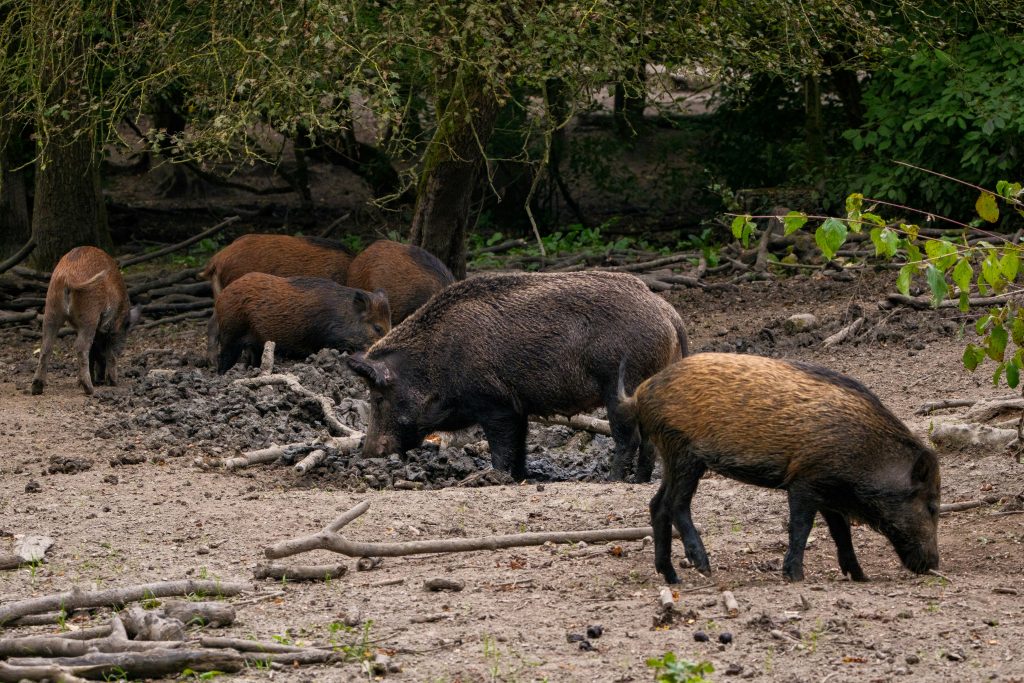
Some nights, the woods around our cabin feel almost too quiet. No deer slipping through at dusk. No fox skirting the tree line. Then the trail cam lights up at 2:13 a.m., and suddenly the forest belongs to the pigs.
First one. Then three. Then a whole sounder—mud-caked round bodies, noses down, moving with purpose through the darkness. If you live anywhere near woods, water, or farmland in South Carolina, chances are you’ve seen this scene play out on your own trail camera. And if you haven’t yet… you probably will.
Wild pigs feel like a modern problem. But their presence in South Carolina is anything but new. Trail cameras catch them rooting up food plots, farmers battle torn-up fields, and hunters debate control strategies. But the truth is, wild pigs have been part of South Carolina’s landscape for centuries, and their story is deeply tied to colonial history, agriculture, and human land use.
Not Native, But Long-Established
Wild pigs are not native to North America. Their roots in South Carolina trace back to the 1500s, when Spanish explorers—including Hernando de Soto—released domestic pigs throughout the Southeast as a mobile food source. These pigs were hardy, fast-breeding, and well-suited to forested environments.
Later, English settlers expanded pig populations even further. In colonial South Carolina, it was common practice to allow pigs to free-range in forests, swamps, and river bottoms, especially in the Lowcountry and Piedmont. Hogs were marked by ear notches or brands, then turned loose to forage on acorns, roots, and mast.
Over time, escaped or abandoned pigs reverted to a wild state—becoming feral.
From Livestock to Wildlife Problem
By the 18th and 19th centuries, feral pigs were firmly established across South Carolina. Unlike cattle or sheep, pigs thrive without human care. Feral pigs are:
- Highly intelligent
- Omnivorous and adaptable
- Capable of breeding as young as 6 months
- Able to produce multiple litters per year
As agriculture expanded and forests were fragmented, pig populations didn’t shrink—they exploded.

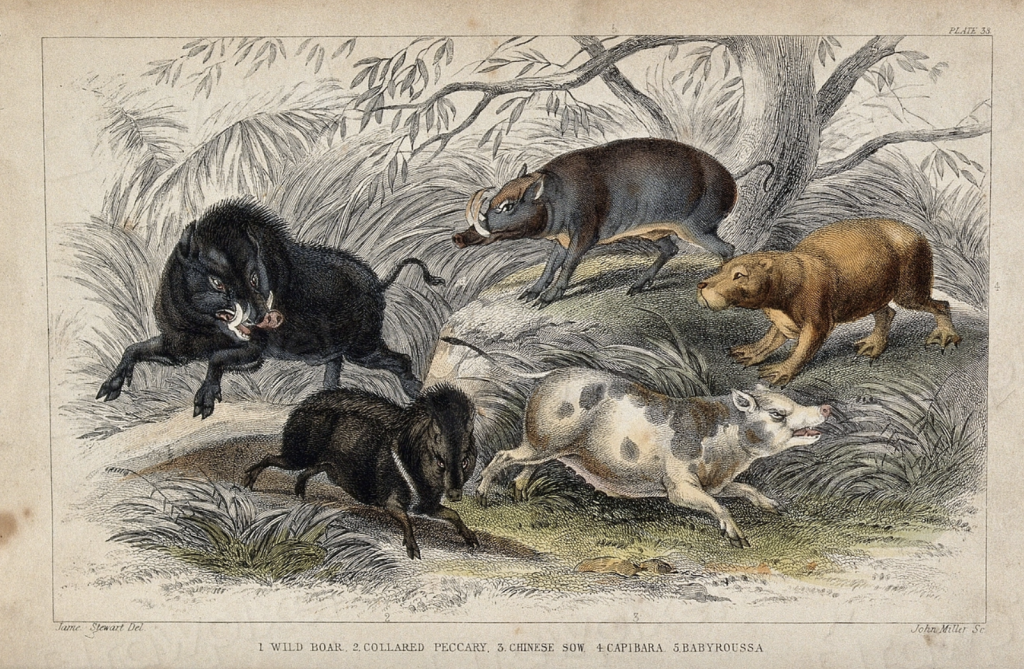
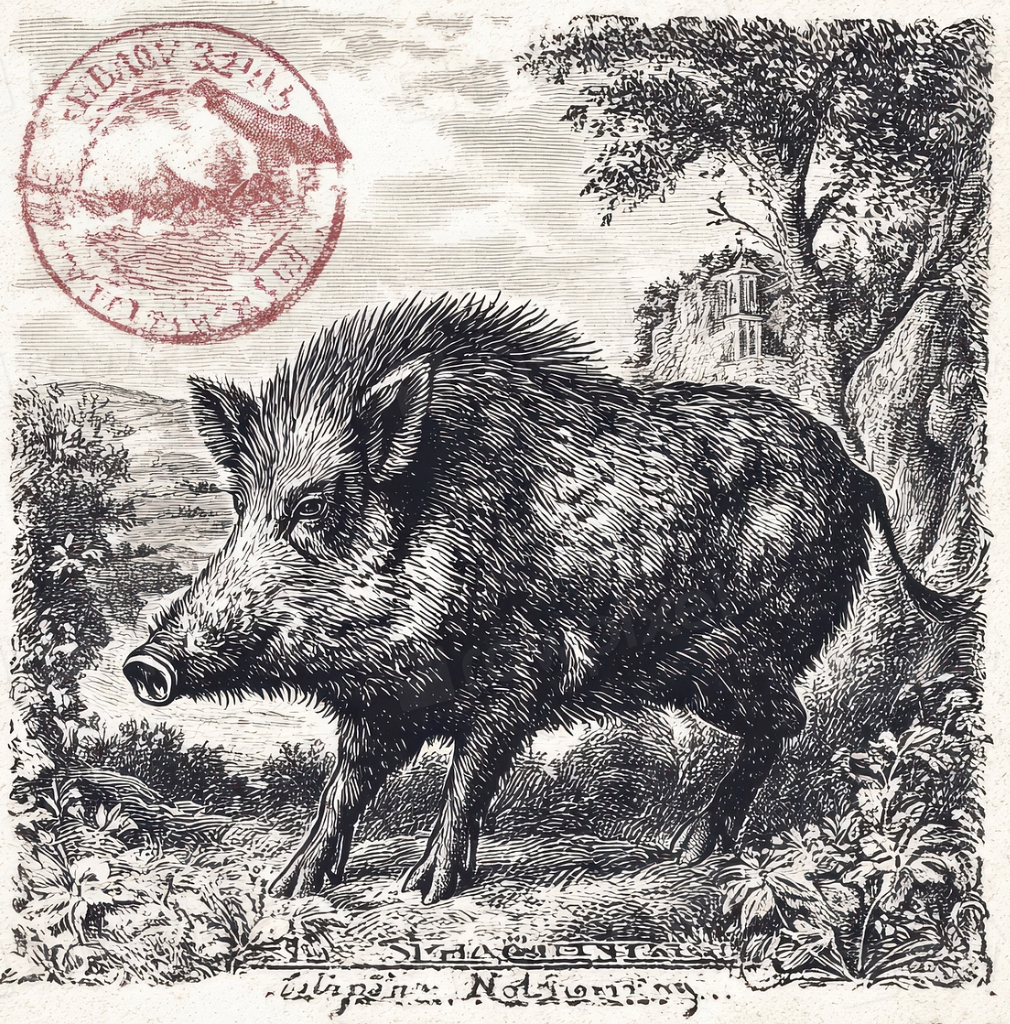
Original in the public domain.
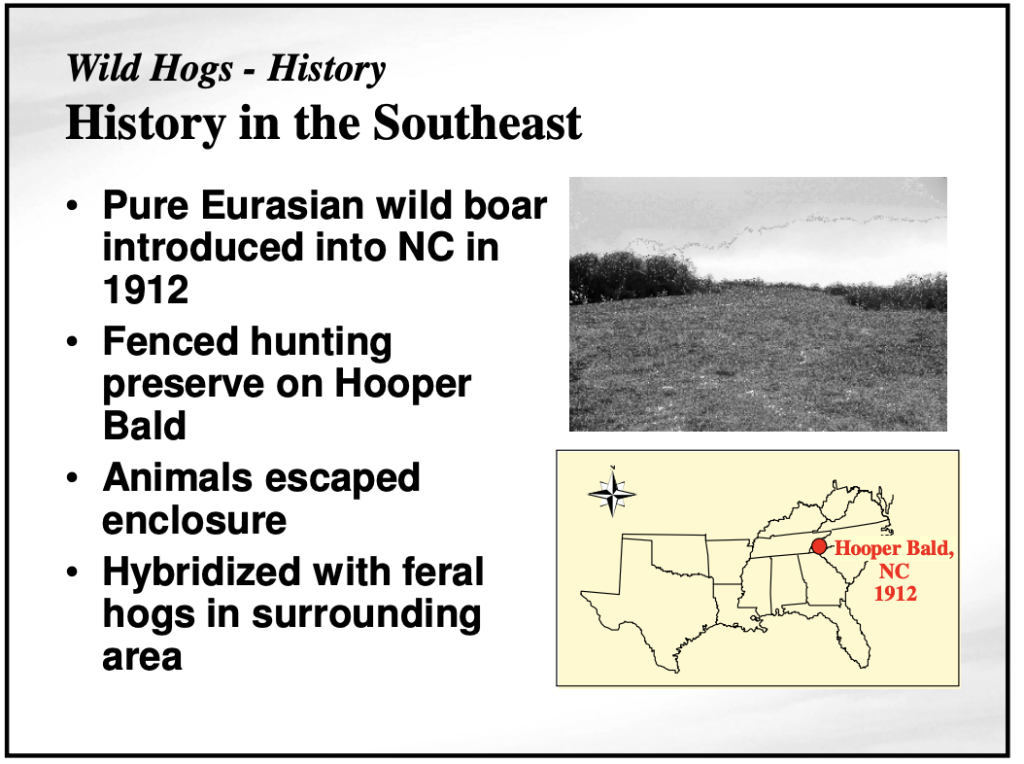
In the 1900s, another factor worsened the issue: intentional releases for hunting. Some landowners brought in Eurasian wild boar or relocated pigs to create sport-hunting opportunities, unintentionally increasing genetic diversity, size, and aggression in wild populations.
Where Wild Pigs Live in South Carolina Today
Today, feral pigs can be found in nearly every county in South Carolina, from the Lowcountry marshes to the foothills of the Blue Ridge.
They thrive especially in:
- Bottomland hardwood forests
- Swamps and river corridors
- Agricultural edges
- Pine plantations
- Foothill and mountain regions with mixed cover
In Upstate areas near forests, lakes, and conservation land, pigs often move between public and private property, making management difficult.
Seeing wild pigs on the trail cam is unsettling in a different way than seeing a bear or bobcat. These animals aren’t just surviving—they’re reshaping the land under our feet. Lawns get torn up. Trails disappear overnight. Food plots look like they have been rototilled by a machine with tusks.
And yet, watching them—clever, coordinated, relentless—it’s impossible not to understand why they’ve succeeded.
From Our Trail Camera: Wild Pigs In South Carolina: What the Trail Cam Reveals Around The Table Rock Area
What the Trail Cam Reveals That Daylight Doesn’t
Trail cameras tell a story most of us never see in daylight.
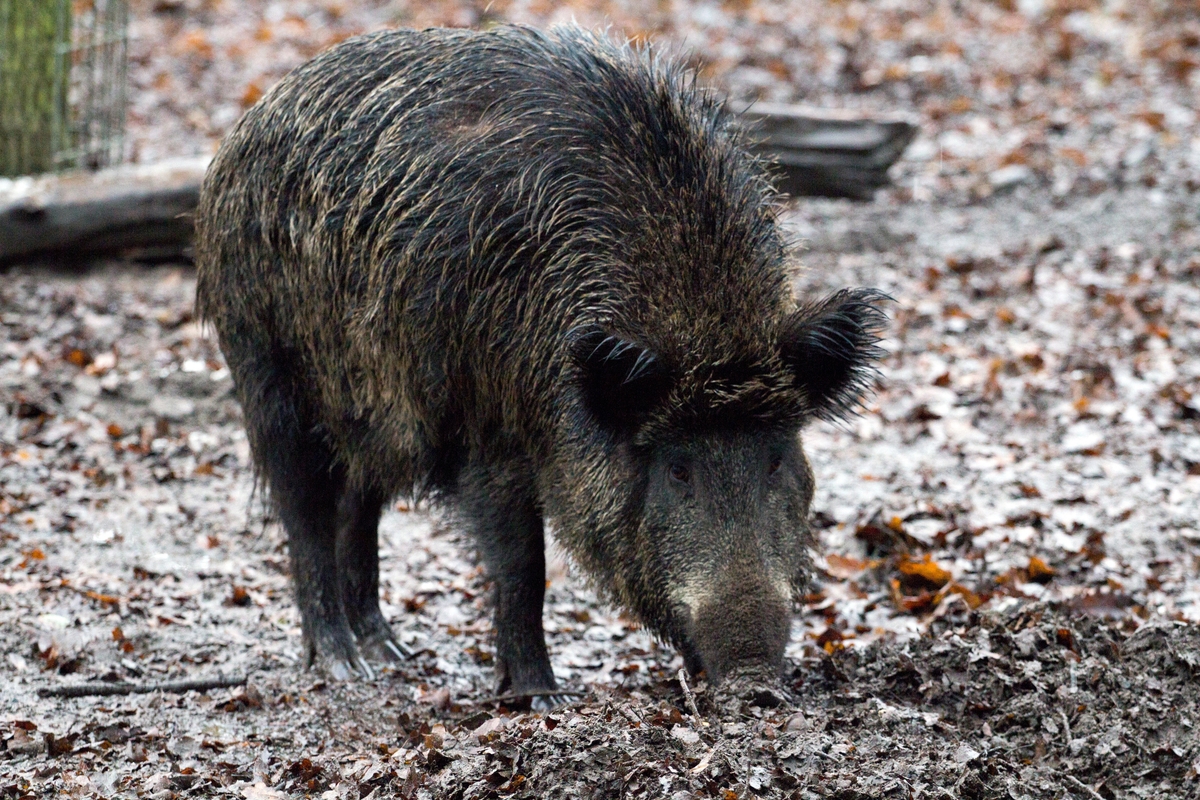
Wild pigs are primarily nocturnal, especially in areas where they’re hunted or pressured. According to the South Carolina Department of Natural Resources (SCDNR), feral hogs quickly adapt their movement patterns to avoid humans—meaning your daylight walks may show nothing, while your camera captures chaos overnight.
Common trail-cam behaviors include:
- Traveling in sounders (family groups, usually females and young)
- Repeated use of the same trails and creek crossings
- Heavy activity near acorn drops, or wet ground
- Sudden appearances after rain, when the soil is easiest to uproot.
Why They’re Such a Big Problem
Wild pigs cause millions of dollars in damage each year in South Carolina. Their impacts include:
- Rooting up crops, lawns, and food plots
- Destroying native plants and tree seedlings
- Competing with deer, turkey, and other wildlife
- Preying on ground-nesting birds, reptiles, and amphibians
- Polluting streams and wetlands
Their rooting behavior can completely alter soil structure and plant communities—especially in sensitive habitats.
How South Carolina Manages Wild Pigs
Because feral pigs are not classified as native wildlife, South Carolina treats them as an invasive species. Regulations allow landowners to remove pigs year-round on private property, and multiple control methods are used:
- Trapping (the most effective population-level control)
- Hunting (useful but rarely enough on its own)
- Exclusion fencing in high-value areas
Despite these efforts, pigs remain extremely difficult to eradicate once established.
South Carolina DNR Facts: Why the Damage Adds Up Fast
According to SCDNR, feral hogs are considered one of the most destructive invasive species in the state.
Key facts:
- A single sow can produce 2 litters per year, with 4–12 piglets per litter
- Populations can double in under 4 months under ideal conditions
- Wild pigs cause millions of dollars in agricultural and property damage annually
- They degrade wildlife habitat by destroying native plants and competing with deer and turkey
- Rooting increases erosion and pollutes streams and wetlands
SCDNR does not classify wild pigs as game animals, meaning they can be removed year-round on private land with landowner permission.
A Legacy Still Unfolding
Wild pigs are a reminder that human decisions echo through ecosystems for centuries. What began as a practical choice by early settlers has become one of the Southeast’s most persistent wildlife challenges.
In South Carolina, feral pigs are now woven into the landscape—seen on trail cameras, along creek banks, and sometimes far too close to home. Understanding their history helps explain why they’re here, why they’re so successful, and why managing them is such a complex task.
Managing Wild Pigs: What Works (and What Doesn’t)
SCDNR emphasizes that hunting alone rarely controls pig populations. Effective management usually requires:
- Large corral traps that remove entire sounders
- Consistent monitoring with trail cameras
- Cooperation between neighboring landowners
- Preventing illegal relocation (which worsens the problem)
Once pigs establish themselves, eradication is extremely difficult.
They may look like wild animals of the forest, but their story is—and always has been—a human one. They are survivors of a story humans started long ago.