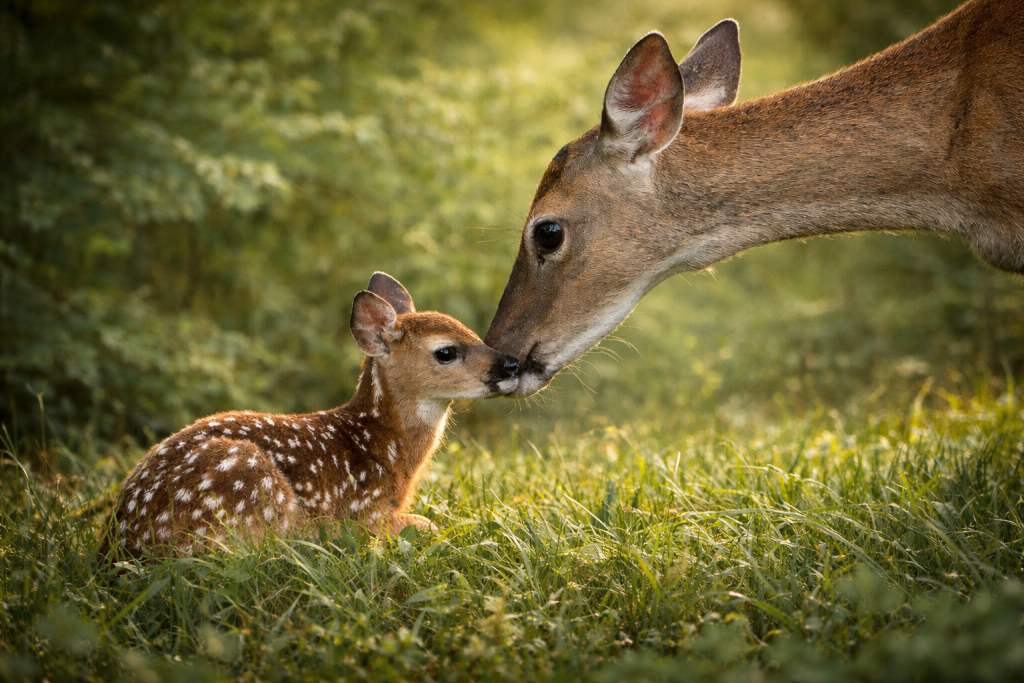
Mother Deer and Fawns in Upstate South Carolina: A Quiet Mother’s Day Story

In the woods of Upstate South Carolina, mother deer and their fawns share a quiet and powerful bond each spring.

There’s something sacred about that special bond. The woods soften. The air carries that fresh green scent. And quietly—almost invisibly—new life begins.

If you’ve ever stepped outside in the early morning and caught a glimpse of a white-tailed deer moving gently through the trees, you may have been witnessing one of nature’s most devoted mothers.

Because this time of year belongs to the does.
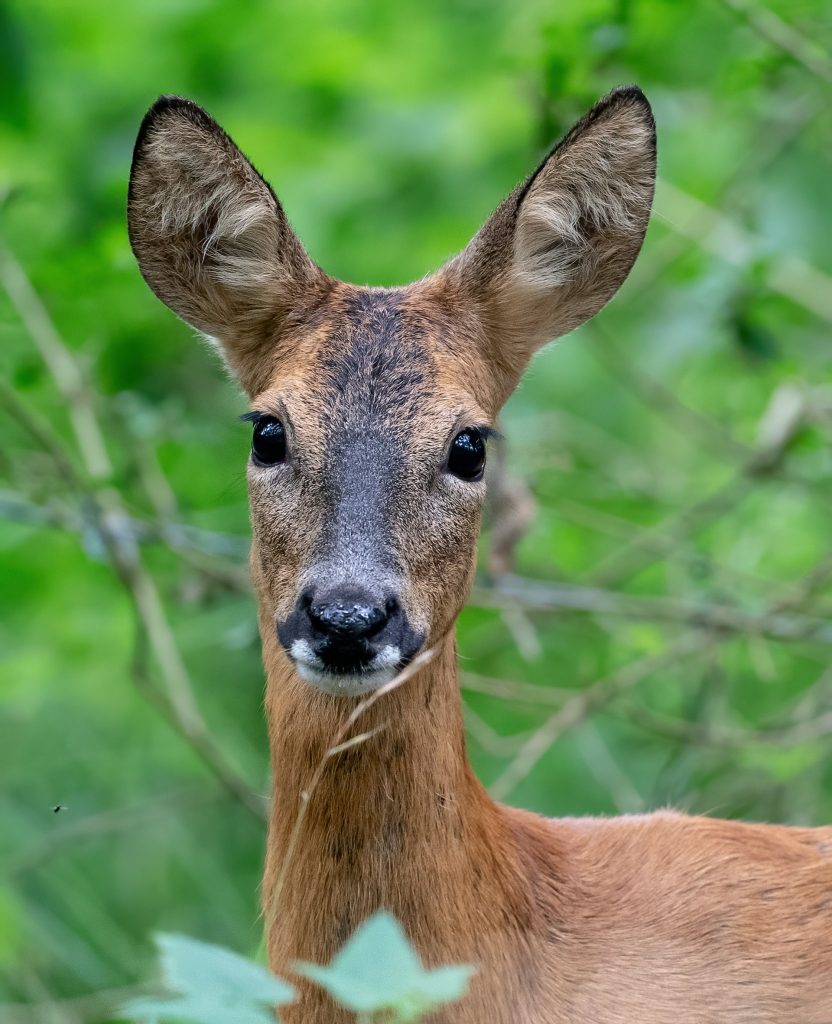
Photo by Bob Brewer

The Quiet Mothers of the Forest

In Upstate South Carolina, especially around places like Table Rock Mountain and the surrounding forests, white-tailed deer begin giving birth in late spring—right around Mother’s Day.

A doe will often find a secluded, grassy area—tucked safely away from predators—and give birth to one or two fawns.

And then something remarkable happens.

She leaves them.

Not out of neglect—but out of deep instinct and protection.

Newborn fawns are born with almost no scent and a coat of soft white spots that mimic sunlight filtering through leaves.
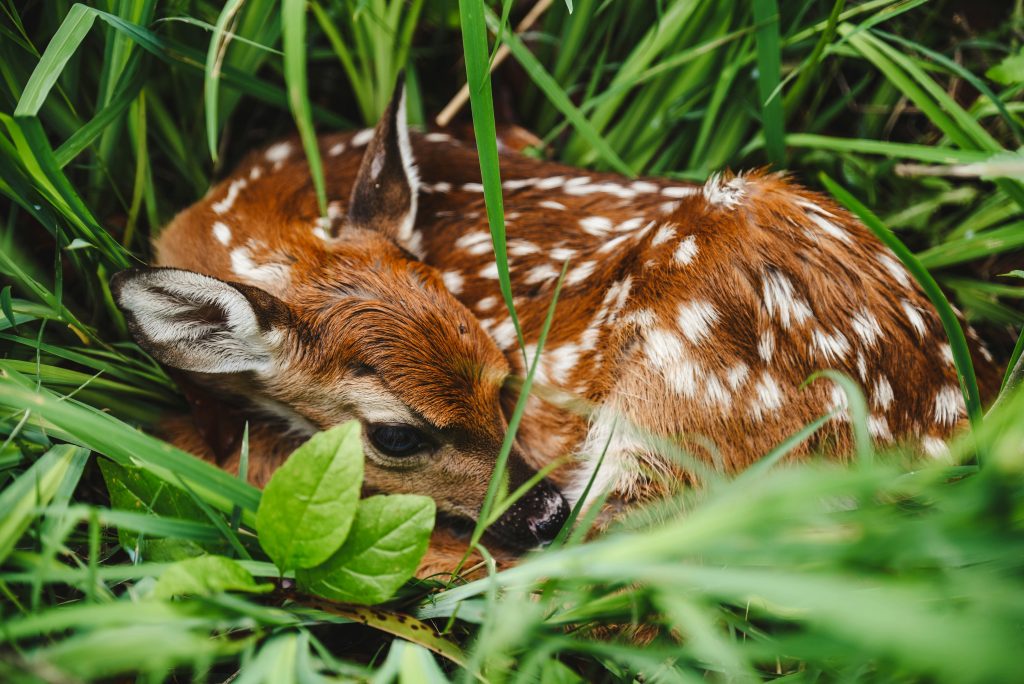
Photo by Erika Fletcher

The Bond Between Doe and Fawn

When the doe returns, the connection is immediate and tender.

She will:

• Gently groom her fawn to keep it clean and scent-free

• Nurse it with rich, nutrient-dense milk

• Move it occasionally to new hiding spots

• Stay alert—always aware of danger

As the weeks pass, the fawn begins to follow her, learning the rhythms of the forest:

where to feed, when to move, how to survive.

Everything it needs to know—comes from her.

 A Mother’s Day Reflection

There’s something deeply humbling about watching a doe and her fawn.

No noise. No recognition. No celebration.

And yet—her devotion is unwavering.

This Mother’s Day, as we celebrate the mothers in our own lives, we can also honor the quiet, unseen mothers of the wild.

The ones who protect without being seen.

Who love from a distance.

Who trust their instincts completely.

Right here in our own backyards… and just beyond the tree line.
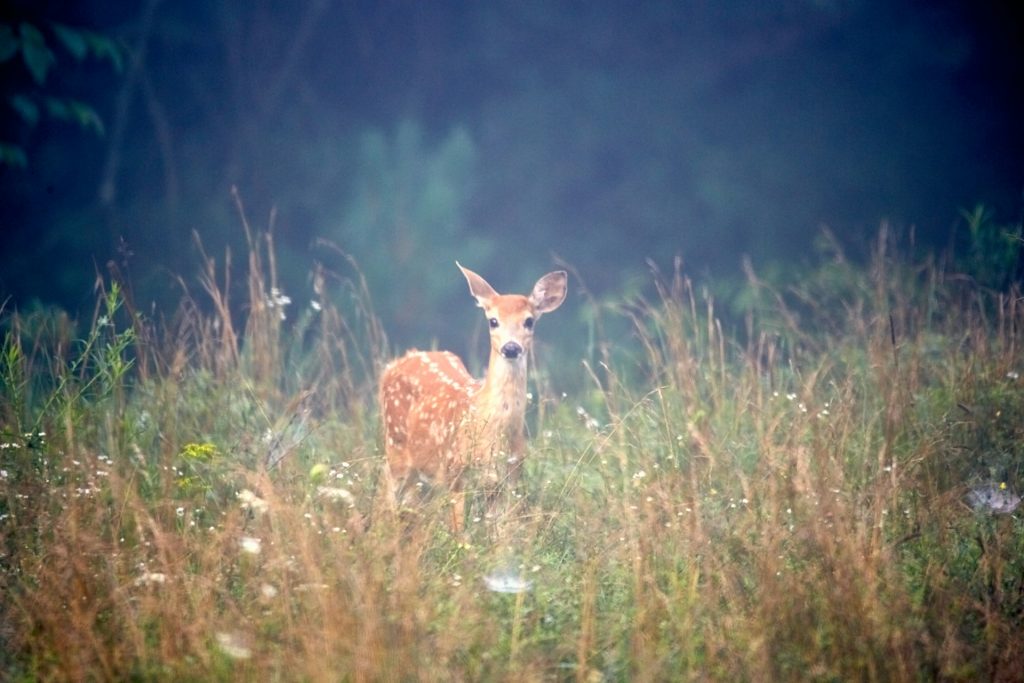
Photo by Mathew Schwartz

If You Find a Fawn Alone

A gentle reminder from the woods:

If you come across a fawn lying alone—do not touch or move it.

Its mother is likely nearby.

The best thing we can do is what nature intended:

leave it undisturbed, and trust the wisdom of the doe.

Life Lessons in the Woods

A doe teaches without words.

She teaches:

• Stillness

• Awareness

• Patience

• Timing

In the quiet woods of Upstate South Carolina, these life lessons mean the difference between survival and disaster.

By summer, what once was a hidden, trembling fawn becomes a steady, graceful young deer—moving through the same trails its mother once walked.
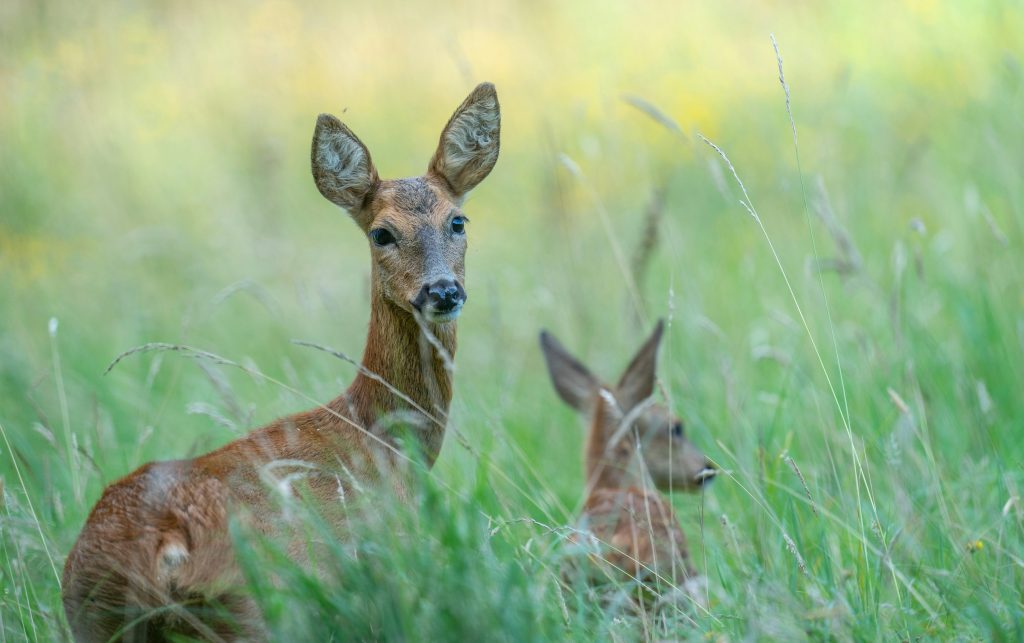
Photo by Bob Brewer

Closing Thoughts

Here in the shadow of the mountains, where the forest breathes and life renews itself each spring, motherhood takes on a quiet, powerful form.

And if you’re lucky enough to witness it—even for just a moment—it stays with you.

A soft reminder that love doesn’t always look loud.

Sometimes… it looks like stillness in the grass.

And a watchful mother just out of sight.

Debra Roinestad

Late Summer Fox Sightings in South Carolina—August Wildlife Videos

red fox
Photo by Louis-Etienne

Foxes are some of the most adaptable and fascinating wild animals in South Carolina. Whether spotted darting across a rural field at dusk or glimpsed on the edges of suburban neighborhoods, these clever creatures spark curiosity. In the Palmetto State, two species call the region home: the red fox (Vulpes vulpes) and the gray fox (Urocyon cinereoargenteus). Each carries unique traits and habits that help them thrive in South Carolina’s diverse landscapes.

Plus, there’s something magical about late August in the South Carolina mountains. The air is still warm, the nights grow just a little cooler, and the forest hums with the transition from summer to fall. And if you’re lucky, you might catch a glimpse of one of the slyest locals: the fox.

The Fox’s Late Summer Routine

By August, foxes are busy preparing for the seasons ahead. They’re clever foragers, taking advantage of insects, berries, and small prey before autumn shifts their diet again. It’s common to see them at dusk or dawn, slipping quietly through fields, wood edges, or along mountain trails.

Foxes in South Carolina often favor the foothills and forested areas (places like Table Rock, Caesars Head, and the rolling stretches near the Blue Ridge). They’re part of the neighborhood here—though most people never realize they’re being watched by a pair of sharp golden eyes from the brush.

A Playful Visitor

In our late-August sighting, the fox was curious but cautious. It paused to sniff the air, flicked its bushy tail, and then trotted off with that graceful trot only foxes have. Watching one up close is like seeing mischief wrapped in fur—half catlike, half doglike, but entirely its own spirit.

Why Fox Sightings Feel So Special

Part of what makes spotting a fox so thrilling is its elusive nature. Unlike the deer that graze openly or the squirrels that chatter loudly, foxes move with purpose and stealth. Catching one on video feels like a secret gift from the forest.

And for those who follow wildlife through the seasons, late August is a wonderful time to observe their behavior shifts. The fox is a reminder that nature is always in motion—even when summer feels like it’s standing still.


Watch the Video 🎥

Take a moment to watch this beautiful creature in action. You’ll see why foxes have inspired folklore, legends, and plenty of backyard daydreams across the Carolinas.

Video by Debra Roinestad (c) The Comfy Cabin, 2025

Tips for Spotting Foxes in South Carolina

• Go out at dawn or dusk – Foxes are crepuscular, most active at these times.

• Stay quiet and patient – They notice movement and sound quickly.

• Watch edges of fields and woods – Foxes like transitional spaces where prey is plentiful.

• Bring binoculars – Even if you don’t see a fox, you’ll enjoy the birds and deer.

Red Fox: The Classic Trickster

red fox
Photo by Yuriy-Chemerys

The red fox, with its signature fiery coat and bushy tail tipped in white, is the more widely recognized species. Red foxes tend to prefer open habitats—fields, farmlands, and woodland edges. They are skilled hunters with a diverse diet: rodents, rabbits, birds, fruits, and even insects. In South Carolina, where farmlands blend seamlessly into forests, red foxes often adapt well to areas near human activity.

Red foxes are primarily nocturnal and crepuscular (most active at dawn and dusk). They dig dens for raising their young, but may also use abandoned burrows or sheltered spaces under sheds and barns. Their adaptability has earned them a reputation as cunning survivors.

Gray Fox: The Tree-Climber

grey fox
Photo by Nikolay-Tchaouchev

The gray fox, although less commonly seen, has a unique advantage—it can climb trees. With hooked claws, the gray fox can scale trunks and branches to escape predators or hunt for birds and eggs. Their salt-and-pepper fur and black-tipped tail help them blend easily into the forest, providing camouflage.

Gray foxes favor dense woodlands and swampy areas, which South Carolina has in abundance. Unlike red foxes, they avoid open spaces and are rarely seen in suburban areas. They, too, are omnivorous, feeding on small mammals, fruits, acorns, and insects, shifting their diets with the seasons.

A Perspective from South Carolina’s Wild Spaces

From the misty Appalachian foothills to the coastal plains, foxes embody adaptability. Red foxes symbolize survival in human-shaped environments, while gray foxes represent the mystery of the deep woods. Together, they remind us that South Carolina’s landscapes are still wild at heart. For those living in or visiting the region, spotting a fox can feel like catching a glimpse of nature’s secret.

Late summer wildlife sightings remind us to slow down, listen, and savor the changing season. The fox may be sly, but if you keep your eyes open, you might spot one slipping through the South Carolina mountains before fall arrives. Their elusive ways, clever habits, and quiet presence add another layer of richness to the state’s wildlife heritage.

Debra Roinestad
Red Fox, Art in the public domain. The New York Public Library

The Many Moods of Table Rock Mountain S.C. Photo Gallery

Pink Moon over Table Rock Mountain
Pink Moon Over Table Rock Mountain by Debra Roinestad

Table Rock has so many moods, with the mountainscape changing ever so rapidly. This beloved monolith is located on the very southern edge of the Appalachian Mountains.

Here is a gallery of photos where I have captured Table Rock throughout the year.

All Photos by Debra Roinestad, (c) The Comfy Cabin, 2024

Video Short: The Many Moods of Table Rock Mountain, (c) Debra Roinestad, The Comfy Cabin, 2024

More Information About Table Rock Mountain

Hiking Table Rock by Kayak 7 Seas

Table Rock Mountain Aireal Views by South Carolina ETV

Discover South Carolina: Table Rock Mountain
https://discoversouthcarolina.com/table-rock

Debra Roinestad

12 Fun Trail Cam Videos Featuring Bears

Bear Necessities

Photo by John Thomas

According to SCDNR, now that we are having warmer weather in SC, black bears are becoming more active. During this time bears are looking for easy food left around.

So far, there have been five different bear sightings here at the cabin. Plus, many more sightings in the woods behind our home.

Bears at the cabin, S.C. – May 23, 2023 at 12:08 pm
Photos by Debra Roinestad

Here are 12 recent trail cam videos featuring bears.

Enjoy the videos! 🙂


Debra Roinestad

12 Fun Trail Cam Videos Featuring Bears

Adorable Black Bears On Trail Camera

Adorable Black Bear: Trail Camera (c) The Comfy Cabin, 2022

September is a special time for black bears. The bears enter hyperphagia and look for food up to 20 hours a day! They have definitely been more active in the back of the woods near our trail camera. Read more about bears in September here.

Hope you have fun watching these trail camera videos.

Regards,

Debra & Kurt Roinestad

Just For Fun!

Donald Duck & Humphrey Bear

Hey, Let’s Talk Turkey!

Turkey Trail Camera, South Carolina

Turkey, Trail Camera, (c) The Comfy Cabin, 2022

This little gal has a cute backstep after eating. Eat, peck, kick, repeat, eat, peck, kick, repeat. Who knew a turkey had a rhythm when eating? Aside from that did you know that turkeys can see better than humans? They can see in color and their eyesight covers 270 degrees. 

For more fun facts about turkeys click here on the World Animal Protection website.

Enjoy the trail camera videos. 🥰

Warm Wishes,

Debra & Kurt Roinestad

Turkey, Trail Camera, (c) The Comfy Cabin, 2022

Turkey, Trail Camera, (c) The Comfy Cabin, 2022

Turkey, Trail Camera, (c) The Comfy Cabin, 2022

Turkey, Trail Camera, (c) The Comfy Cabin, 2022

“Most people don’t realize turkeys are friendly, they’re social, they’re loyal, and they have emotions.” —Shannon Elizabeth

American Wild Turkey, Crested Curassow, Galeated Curassow, and Red Curassow from A history of the earth and animated nature (1820) by Oliver Goldsmith (1730-1774).

Setting-Up Trail Cameras In The Woods

The back of our woods belongs to bears that hibernate and start poking around for food and adventure during the Spring. I wanted to set up some new trail cameras to catch some of the action. I gathered up my hiking equipment and had a fun yet, grueling two-hour hike through the woods behind our cabin. The trail was once a logging road…I’m guessing back in the 1800s. Now it is overgrown with trees and mountain laurel. It winds through steep rolling hills. I wore my sturdiest boots since snake season had just arrived. The woods are mature, but you can still see signs of an old farm including rusty strands of barbed wire and the remnants of a shed.

We researched and decided on the Visionner 4.0 WiFi 830 Trail Camera, though there are many other excellent trail cameras out there. The camera has a function that captures high-quality images and videos with night vision. The images can download directly to an app on your cellphone if you are within 60 feet of the camera.

App. for the Visionner 4.0 WiFi 830 Trail Camera. (c) The Comfy Cabin, 2022

Read more about the trail camera here.

Video of the Bears Visiting Us Last Year

Black Bear and Cubs. (c) The Comfy Cabin, 2022
Hiking Trail, (c) The Comfy Cabin, 2022
[embedyt] https://www.youtube.com/watch?v=AKv_vCfICfA[/embedyt]

The trees in this area are covered in a blanket of moss. It was challenging to find the right tree with the correct thickness to hold the cameras steady. Trail cameras need to wrap securely around the tree trunk with velcro straps. We encountered a small brown snake and an adorable ‘spiny lizard.’


Read more about the lizard here.

There were bear tracks along the area during our hike. So, I’m hopeful we will get some footage! I’m excited to share the trail camera images with you.

Warm Regards,
Debra & Kurt Roinestad

Trail Camera Raccoons In The Backyard

Hi Friends,
Here is a family of raccoons that come and visit at night. My trail camera captured these cuties sneaking around the back of the woods. It was a rainy day in February, but the late-night munchies did not stop these from raccoons searching around for a snack. Now, given this situation…I can relate! 😆
Warm Regards,
Debra

Raccoons (c) The Comfy Cabin, 2022

According to the South Carolina Department of Natural Resources (SCDNR), raccoons are monogamous and breed primarily in late winter (January and February) after their first or second year. Following a gestation period of approximately 2 months, females give birth in April or May to a litter of two to four pups in a hollow den tree. Female raccoons wean their young at 16 weeks and continue to care for them for approximately 9 months. Raccoons inhabit most of the United States, including all of South Carolina, with population densities being higher along coastal areas than inland.

Bright Eyes, Raccoons. (c) The Comfy Cabin, 2022

BBC Raccoons Problem Solving Skills

Just For Fun

Eva Russell Chandler Heritage Preserve, S.C.

Eva Russell Chandler Heritage Preserve, (c) Debra Roinestad, The Comfy Cabin, 2022
Debra Roinestad, Blogger.
(c) The Comfy Cabin, 2022

On Sunday, I enjoyed a short and soul-cleansing hike at Eva Russell Chandler Heritage Preserve. The area has a high vibration and calmness that clears away any stress. The trail is an easy hike about a 0.4 mile lightly trafficked loop located near Cleveland, South Carolina on Persimmon Ridge Road. The trail is used for hiking, walking, bird watching. Dogs are allowed on the trail too. What is magical about this place is that you can get to the top of the Blue Ridge cliff and have a wonderful view looking South into Northern Carolina.

Eva Russell Chandler Heritage Preserve, (c) The Comfy Cabin, 2022

Trees, Eva Russell Chandler Heritage Preserve. (c) Debra Roinestad, The Comfy Cabin, 2022
Moss shaped like a foot-print. (c) Debra Roinestad, The Comfy Cabin, 2022


Credit: Map from SC Trails Program

Eva Russell Chandler is home to several rare plant species including Grass-of-Parnassus, Indian paintbrush, and Divided-Leaf Groundsel. I found another rare species not yet identified on this trail, ‘Dimple Trout Lily’. More information on Dimple Trout Lily is in this link.

Dimple Trout Lily. (c) Debra Roinestad, The Comfy Cabin, 2022

Here is more information from a fellow blogger, Mark’s Photo Travel in this link.

I would put this on my visit list for anyone here in South Carolina or just visiting!

➡️ Address: Persimmon Ridge Rd, Cleveland, SC 29635
It is located about 7 miles from the entrance where Persimmon Ridge Rd connects to 276 highway. Once up drive up a hill, there is a large sign that clearly marks the preserve.

Why Visit Table Rock Sate Park SC

One of the many reasons I like to visit Table Rock State Park is that I can visit the funky mallard duck that swims by each day. But seriously, it’s one of the best places to go and chill during the week or weekend. The visitors center has an adorable shop and lovely sales on hoodies, blankets, hats, and home decor.

Mallard Duck, (c) The Comfy Cabin, 2022
Dock, Table Rock State Park, (c) The Comfy Cabin, 2022

Then there’s a dock where you can admire a closer view of Table Rock Mountain. That’s where I met my funky duck friend. Watch him on youtube here. Also, you can rent paddle boats or canoes during the summer months.

Table Rock State Park, (c) The Comfy Cabin, 2022

This place is magical. If you are visiting South Carolina, stop by to refresh and renew.

For information click on this link.

Kind Regards,
Debra & Kurt

Debra & Kurt (c) The Comfy Cabin, 2022