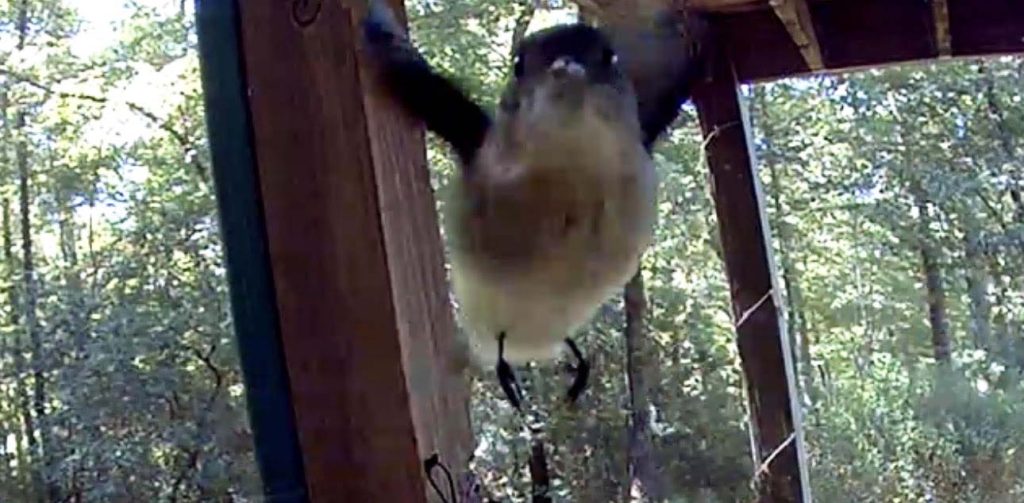
One of my favorite things about our wildlife camera is discovering moments that happen too quickly to notice. This time, I caught a Carolina chickadee in flight and paused the video to create a freeze frame. With its wings raised and tiny feet dangling, this little visitor looks almost suspended in the air!
© 2026 Debra Roinestad/The Comfy Cabin.
This freeze frame preserves just a fraction of a second, but it inspired me to learn more about this busy woodland bird. Although it doesn’t reveal exactly what the chickadee was doing, it offers a wonderful glimpse of life in motion.
Video © 2026 Debra Roinestad/The Comfy Cabin.
Meet the Carolina Chickadee
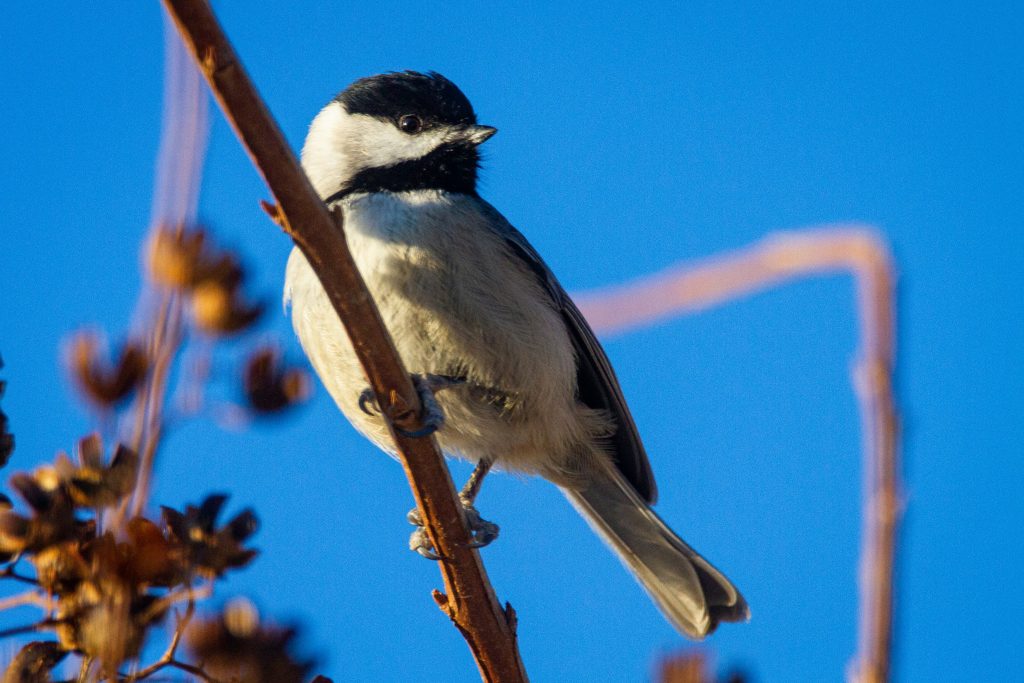
Carolina chickadees have black caps and throat patches, white cheeks, gray backs and wings, and pale undersides. Measuring roughly four to five inches long, they are small birds with rounded heads and plenty of energy. They live in the Southeast throughout the year, so our autumn visitors may remain nearby through winter.
For a closer look at chickadees and their fascinating behavior, enjoy this video from Lesley the Bird Nerd. It offers a broader introduction to these lively little birds.
Busy Little Woodland Acrobats
If you watch a chickadee among the branches, you may see it hanging upside down while searching leaves and bark for insects and spiders. These birds can also briefly hover to collect food or catch an insect in flight.
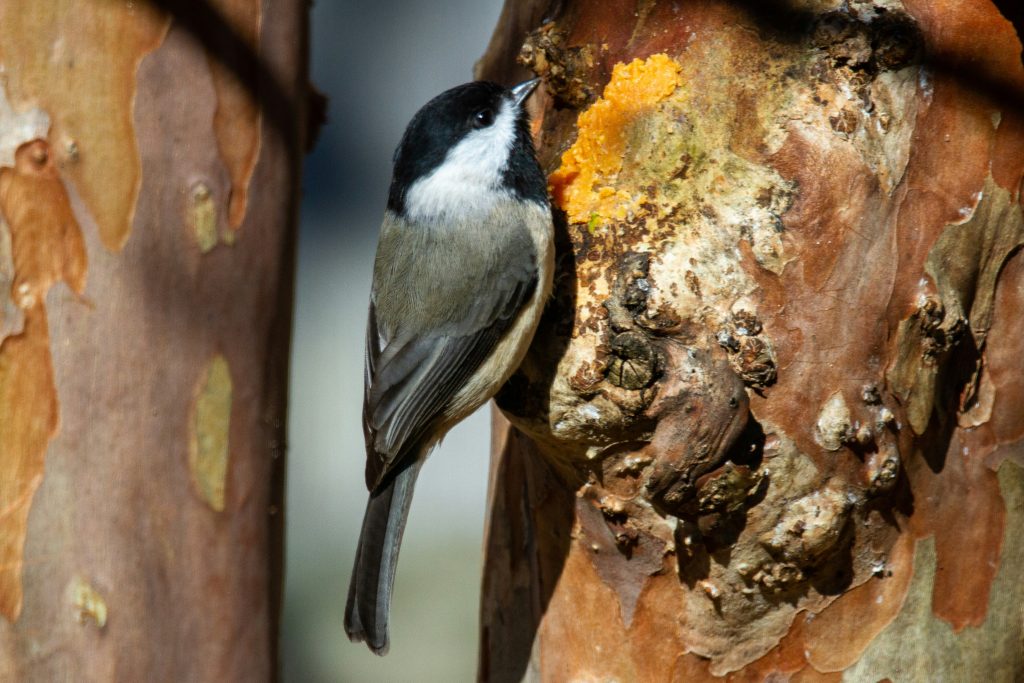
At a feeder, a Carolina chickadee often collects one seed and carries it to a separate nearby branch. There, it holds the seed against the perch with its feet and pecks it open—a clever technique for such a tiny bird.
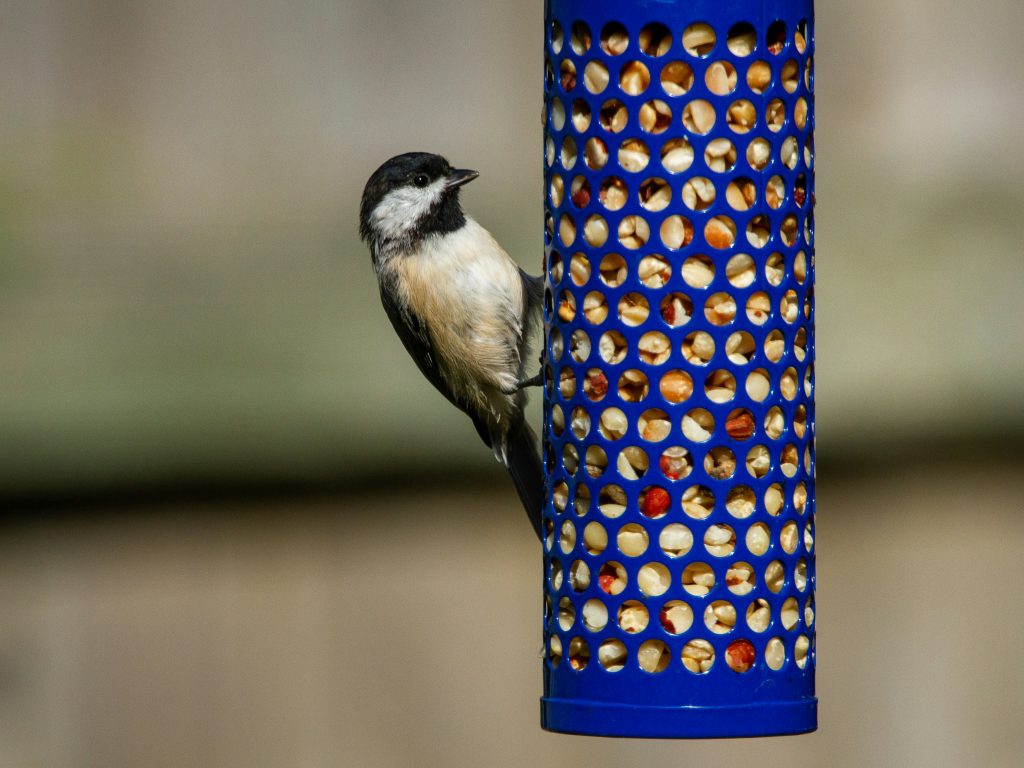
Insects and spiders remain important foods through much of the year. During winter, seeds and other plant foods make up a larger share of the chickadee’s diet. Carolina chickadees also store food and return to retrieve it later, creating little hidden reserves.
Outside the nesting season, chickadees become familiar members of woodland feeding groups. Their winter flocks may contain two to eight Carolina chickadees, with tufted titmice, nuthatches, and other birds joining them as they travel through the trees.
Discover more about chickadees in 5 Things You Didn’t Know About Chickadees! from Badgerland Birding.
Listen for the Carolina Chickadee
Sometimes you’ll hear a Carolina chickadee before you spot it! Listen for its quick “chick-a-dee-dee-dee” call and its whistled song, which often has four notes.
The video below, from Navarre’s Wild Shots, shares examples of Carolina chickadee calls and sounds to help you recognize this little woodland neighbor.
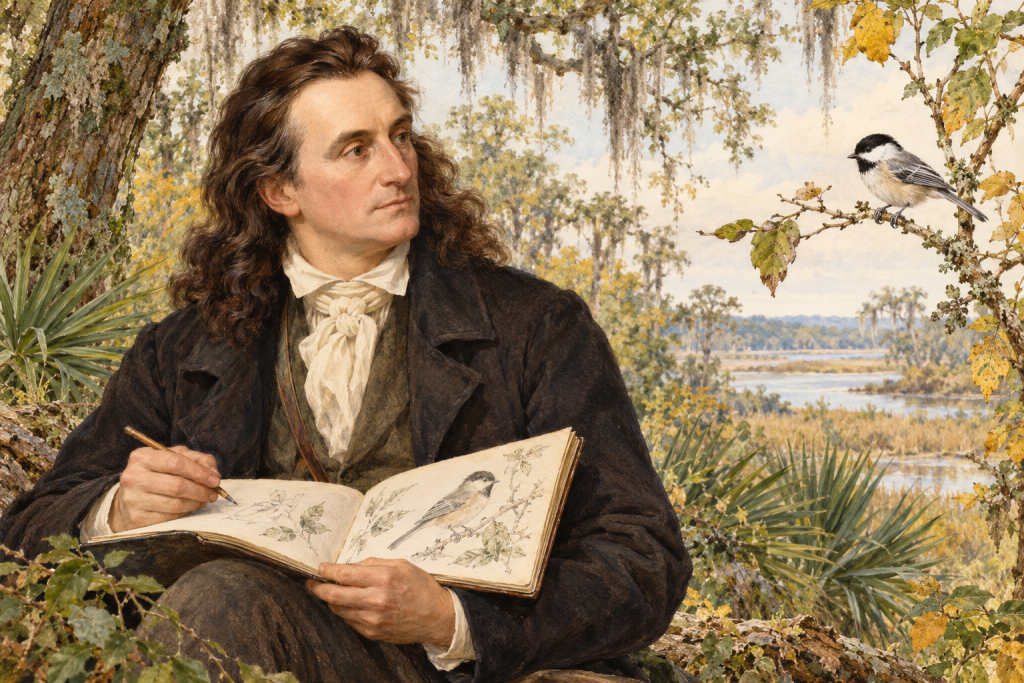
Fun Fact: John James Audubon named the Carolina chickadee while he was in South Carolina!
This tiny visitor reminded me to pause and look closely. Around the cabin, even a split second can become a moment worth sharing. 🍂🐦❤️
Warm regards,